
Nobody wakes up planning to give up their dog. If you are reading this, something has probably gone wrong: a job move, a health problem, a new baby, a landlord who says no, money trouble, or a dog whose behaviour has become too much to handle. First, you are not a bad person for asking this question. Asking is far better than the alternative, which is leaving a dog on the street.
This guide walks you through the responsible options in order, from solving the problem so you can keep your dog, to handing your dog over safely when you truly cannot. It also tells you what the law says, what shelters will ask you, and how to make a surrender easier for the dog and for the people who take them in.
Quick answer
- Yes, you can surrender a dog in India, but free does not always mean easy. Most shelters and NGOs are full and work on waiting lists.
- Never abandon a dog on the street, at a temple, or outside a shelter at night. It is cruel, dangerous for the dog, and can be treated as an offence.
- The most successful surrenders are planned: you contact several organisations early, share honest information about your dog, and offer some support toward their care.
- Use the steps below, in order. Surrender should be the last rung of the ladder, not the first.
Before you surrender: 5 questions to ask yourself
Many surrenders happen in a moment of crisis, and many of those crises can be fixed. Spend ten honest minutes on these:
- Is it a behaviour problem? Barking, chewing, toilet accidents, and separation anxiety are common and often improve with a trainer or a vet behaviourist.
- Is it a money problem? Ask your vet about payment plans, and ask local rescue groups whether they have vaccination or food support for owners in difficulty.
- Is it a housing problem? Some societies in India push back on dogs. Check your rights, and read your society’s bye-laws before assuming you must give your dog up.
- Is it a time problem? A dog walker, a daycare, or a neighbour on a small monthly payment can solve what feels impossible.
- Is it a temporary problem? A transfer, surgery, or travel might only need short-term boarding or a foster, not a permanent goodbye.
If you answered yes to any of these, try the fix first. If the answer is still “I cannot keep my dog”, read on.
Is abandoning a dog illegal in India?
Yes, abandonment is treated as cruelty. Under the Prevention of Cruelty to Animals Act, 1960, Section 11 lists abandoning an animal in circumstances where it is likely to suffer from hunger or thirst as an act of cruelty. Animal welfare groups have also long pointed out that the penalties written into the Act are very small (a first-offence fine of just ₹10 to ₹50 under Section 11), which is why the law alone does not protect abandoned dogs. Local rules and municipal bye-laws may add further obligations.
The practical point is simple: surrendering through a shelter, an NGO, or a vetted new owner is legal and responsible. Leaving the dog somewhere and walking away is not. (Editor’s note: have this section reviewed by a legal professional before publishing, and add the current penalty details from the latest official text.)
The options ladder: work from the top down
Think of this as a ladder. Try each rung before moving to the next one.
Rung 1: Keep your dog with support
Trainer, vet help, a dog walker, family backup, or financial help from a rescue group. Cheapest for you, and best for your dog.
Rung 2: Temporary care (boarding or foster)
If your situation is short-term, ask friends, family, a local foster network, or a boarding facility. Many people discover their problem is a 2 to 3 month gap, not a lifetime one.
Rung 3: Rehome through people you trust
Friends, colleagues, your vet, your building’s dog-lovers group, and breed communities can often find a safe home faster than a shelter can. If you go this way, screen carefully. Our guide to rehoming your dog yourself with a safe screening checklist shows how.
Rung 4: Rescues and NGOs
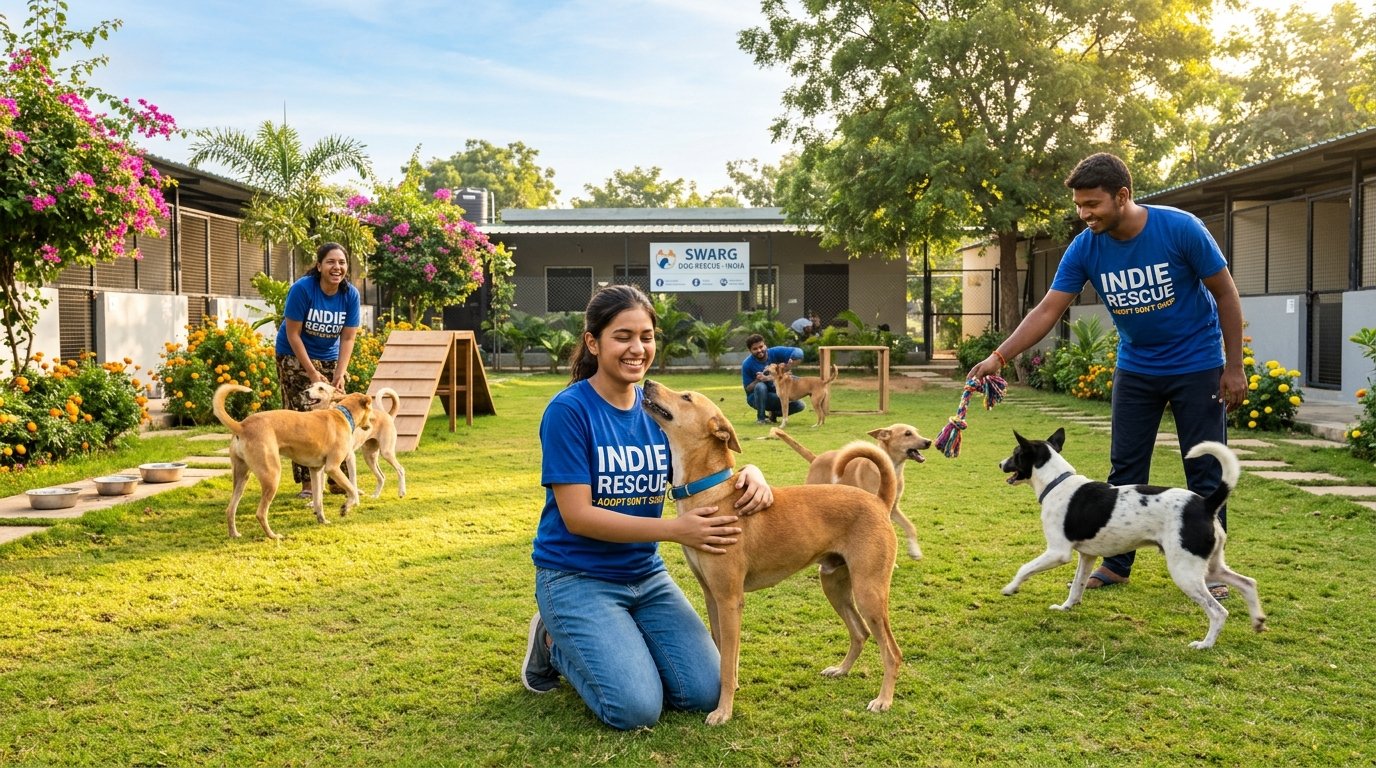
Breed-specific rescues, local animal welfare societies, and registered NGOs may take owner-surrendered dogs, often into foster homes rather than kennels.
Rung 5: Shelters
A registered shelter can take your dog if they have space. Expect questions, a possible waiting period, and a request for support toward the dog’s care.
Rung 6: Never an option
Abandonment, giving the dog to a stranger who offers money and asks no questions, or “free to good home” posts with no screening. These put dogs at risk of neglect, fighting, breeding abuse, or being resold. Curious why it happens so often? Read why pets get abandoned and how to prevent it.
Where can you surrender a dog for free in India?
Here is the honest answer. There is rarely a place that will take any dog, immediately, with no questions, and no expectation. What exists is a mix of:
- Local SPCAs and animal welfare societies in many cities, including Mumbai, that may accept or guide owner surrenders.
- Registered NGOs and shelters with intake or enquiry forms.
- Breed-specific rescue groups, which are often best for purebreds.
- Foster-based rescues that place dogs in homes rather than kennels.
- Municipal and government pounds, which are not designed for owned pets and usually do not rehome well. Treat these as a last resort.
How to check an organisation is genuine: ask for its registration details and whether it is recognised by the Animal Welfare Board of India, look for a real address and a named person, ask to see where the dogs live, and check recent updates on its social media. See our guide on how to choose a trustworthy animal charity for the full checklist.
Searching in your own city: try “animal shelter near me”, “dog rescue [your city]”, and “NGO that takes unwanted pets [your city]”. If you are in Mumbai, contact several groups at the same time, because replies can take days. New to how this system works? See how animal shelters in India work.
What shelters will ask you
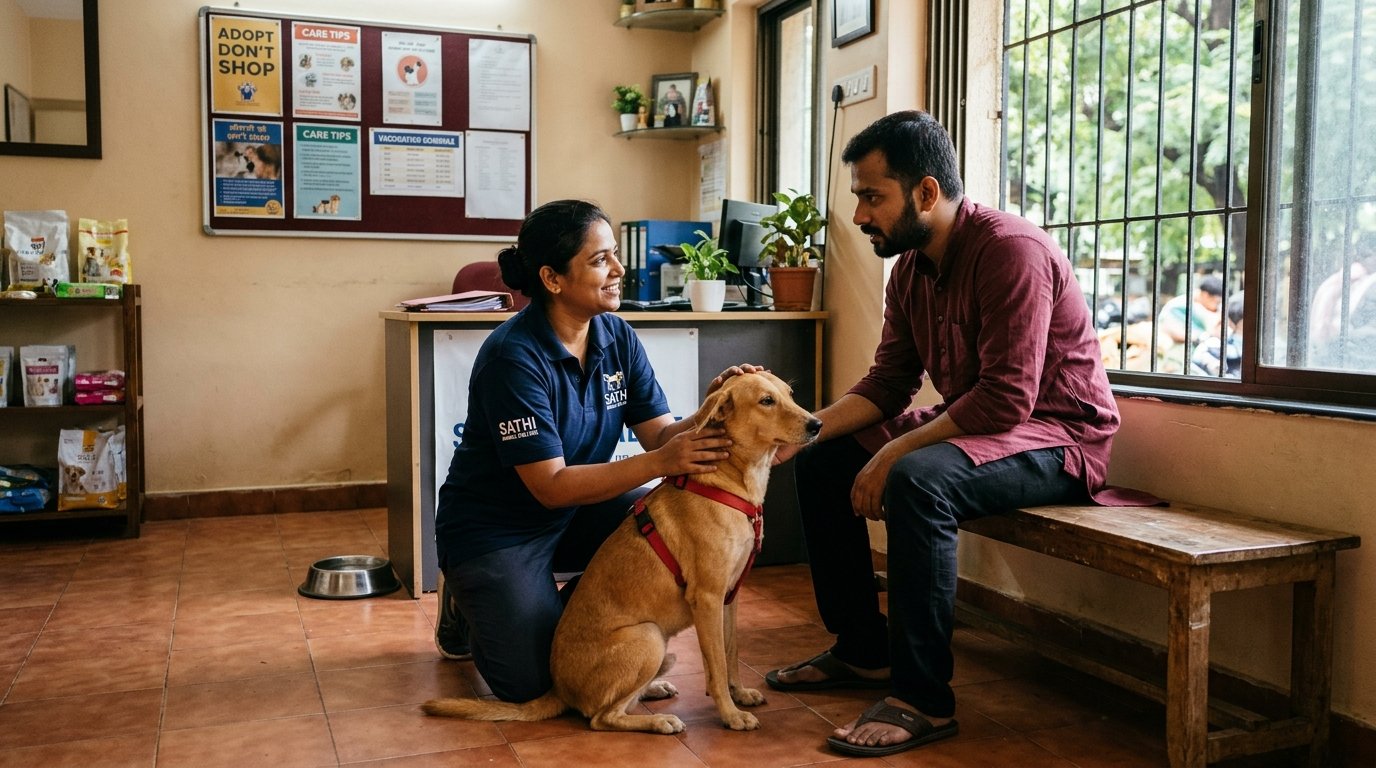
A good shelter will ask more questions than you expect. This is a sign they are responsible, not that they are rejecting you. Be ready to answer:
- Your dog’s age, breed or mix, sex, and whether they are sterilised.
- Vaccination and deworming records, and any medical conditions.
- Behaviour with children, other dogs, cats, and strangers.
- Any history of biting, guarding, or aggression. Be honest here: hiding it can put the dog and the next family at risk.
- Why you are surrendering, and how long you have had the dog.
- Whether you can keep the dog for a few weeks while a space opens up.
- Whether you can contribute toward the dog’s care.
Prepare a one-page handover profile: photo, name, age, diet, feeding times, medical notes, favourite toys, commands the dog knows, fears, and daily routine. It helps staff settle the dog faster and helps a future adopter understand them.
The insight most guides miss: bring a “Send-off Fund”, not just a dog
Here is a truth shelters rarely say out loud: every dog they take in is a cost they must carry. Food, vaccines, sterilisation, treatment, and staff time all add up, and most shelters in India run on donations. When a shelter is deciding between two requests with one empty space, the owner who arrives prepared to help carry that cost is simply easier to say yes to.
So instead of only asking “will you take my dog?”, offer a Send-off Fund: a one-time contribution toward your dog’s first weeks of care. It does not have to be large. You might cover:
- Up-to-date vaccinations and sterilisation before handover.
- A month of the dog’s regular food.
- A donation toward the shelter’s general care costs, in whatever amount you can afford.
Why this works:
- It shows you are responsible. You are treating this as a handover, not a drop-off.
- It protects the dog. A dog who is already vaccinated and sterilised is safer in a shelter and easier to rehome.
- It shortens the wait. A shelter that is stretched thin will often prioritise the dog who arrives with their costs partly covered.
If money is tight, the fund can be non-monetary: a month of foster care before handover, transport to the shelter, photos and a write-up for the dog’s adoption listing, or helping to share the dog’s story. (Illustrative only: the amount depends entirely on your dog, your city, and the shelter.)
Call script: what to say when you contact a shelter
Copy this, adjust it, and use it for every call or message.
“Hello, my name is [name]. I have a [age]-year-old [breed/mix], [name], who is [vaccinated/sterilised]. I am no longer able to keep them because [honest, brief reason]. I would like to find out whether you can take them, or guide me to a better option. I can provide a full health and behaviour profile, and I would like to contribute toward their care. Could you tell me about your intake process and how long it takes?”
A few tips:
- Keep your reason honest and short. Blame and long stories do not help.
- Ask about the waiting time, whether they use foster homes, and what happens if the dog is not adopted.
- Ask if you can visit first.
- Write down who you spoke to and when.
Safer alternatives if no shelter has space
- Ask for a “bridge period”: keep your dog a few more weeks while the organisation lines up a foster or space.
- Post on verified community groups with a proper profile, not just “dog free to good home”.
- Ask your vet whether any clients are looking to adopt.
- Contact several organisations at once and tell each one you are doing so.
- Use screening before any handover to a private adopter: meet in person, visit their home, ask for references, and sign a simple handover agreement.
What not to do
- Do not leave your dog on the street, near a market, or outside a shelter gate.
- Do not hand a dog to someone who offers money but asks nothing about the dog’s future.
- Do not post “free to good home” with no screening.
- Do not hide medical or behaviour issues. This is the most common reason adoptions fail.
- Do not wait until the last day. Start at least a few weeks early whenever possible.
Saying goodbye: making the handover easier on your dog
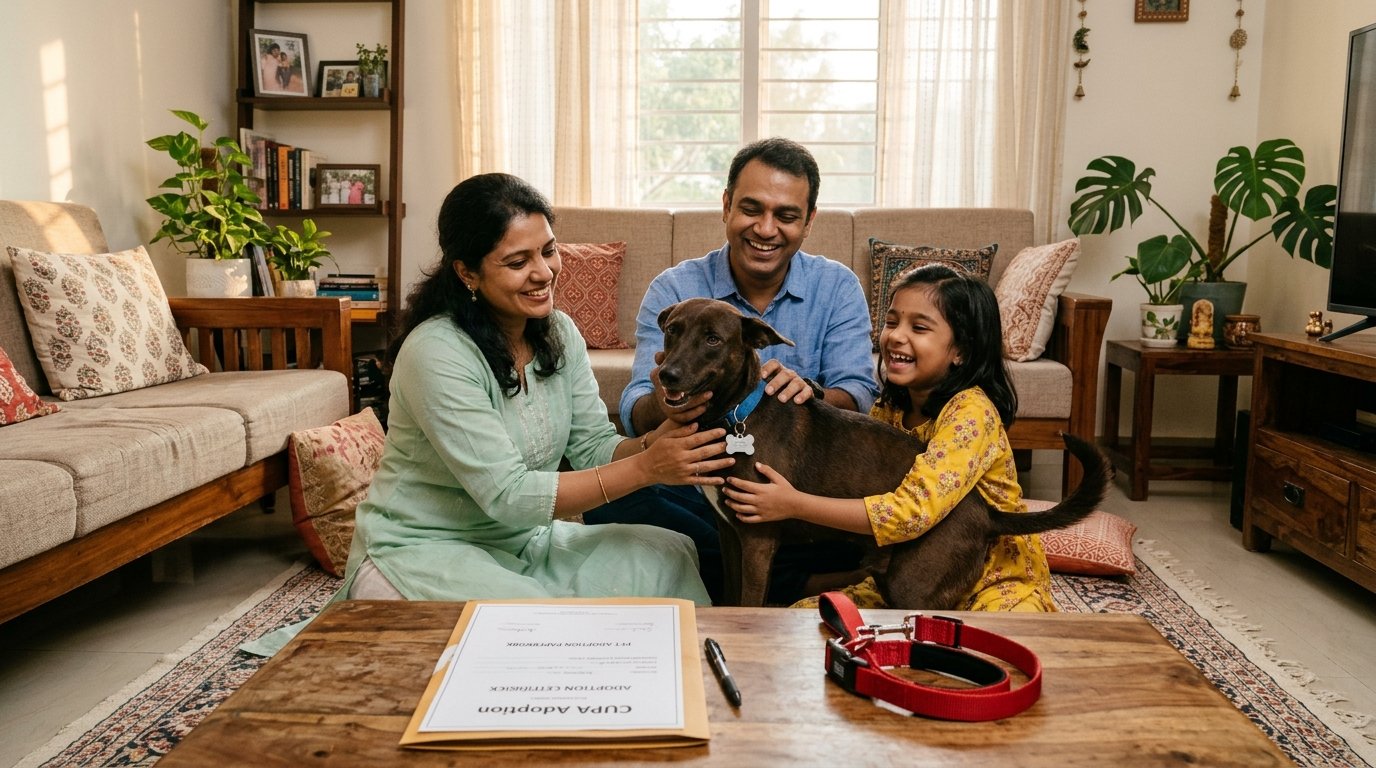
Keep the routine as normal as possible. Send the dog with a familiar blanket or toy and a note about their favourite food and habits. Stay calm at the handover, because dogs read emotions. Afterwards, ask the shelter if they can share updates. Many will, even if they cannot share adopter details. New homes also take time: the 3-3-3 rule for dogs explains what the first weeks look like for a dog in a new place.
Frequently asked questions
Can I surrender my dog to a shelter in Mumbai? In most cases, yes, but not instantly. Contact several shelters, NGOs, and local animal welfare societies at once, ask about waiting times, and be ready to provide health and behaviour details.
Is there an NGO that takes unwanted pets? Some do, but most are over capacity. Look for registered organisations that run an intake or enquiry form and can explain how they handle surrendered pets.
Is abandoning a dog illegal in India? Yes. Abandonment is treated as cruelty under the Prevention of Cruelty to Animals Act, 1960. Surrender through a shelter or a screened new owner is the responsible route.
Is it free to surrender a dog? Some organisations do not charge a fee, but most welcome a contribution because of their care costs. Ask directly and honestly.
What if my dog has bitten someone? Tell the shelter everything. Some organisations cannot take dogs with a bite history, but honesty lets them find the safest option, which may be a specialist trainer or a behaviour-focused rescue.
What if my dog is old or sick? Senior and ill dogs are harder to place. Be upfront, offer a larger Send-off Fund if you can, and ask whether the organisation has a hospice or long-term foster programme.
Need help with your dog? Talk to us
If you are struggling to keep your dog and want to explore responsible options, HopeMitra Foundation can help. Fill in our intake or enquiry form and our team will get back to you with guidance. We cannot promise a space for every dog, but we will help you find the safest next step.
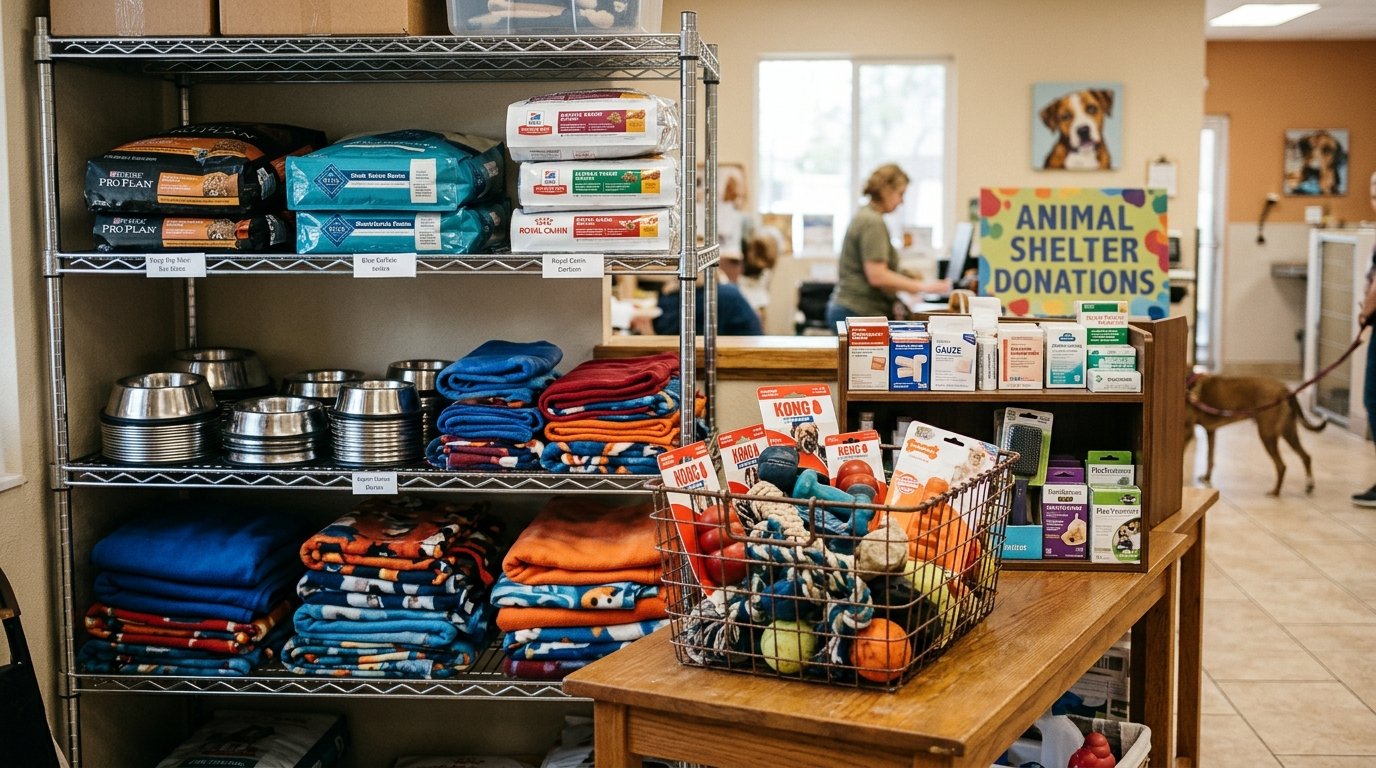
Prefer to give support rather than receive it? See our shelter needs list or learn how to choose a charity to help dogs.