

A dog has settled outside your gate. It sleeps there, follows you down the lane, and barks when someone passes. Maybe you like it, maybe you are nervous, maybe your family or neighbours are upset. Whichever it is, you want to know what you can do.
The short answer is that you cannot simply “remove” the dog, and you do not have to. In most cases the dog stays for a reason you can understand and change. This guide explains why dogs stay, how to gently change the situation, what the law in India says, and who to call if things are not safe.
Legal note: Rules on stray and community dogs in India have been updated several times since 2025. This guide reflects the position as of November 2026. Please check current rules for your city, and have the legal sections of this page reviewed before publishing.
Quick Answer
- Do not harm, poison, scare with chemicals or move the dog yourself. It is illegal, and it usually does not work.
- Find out why the dog stays. Food, shade, safety, territory or a person are the usual reasons.
- Remove the reason, not the dog. Gentle changes work better than force.
- Check whether the dog is lost, injured or unsterilised, and call a rescue or the municipal ABC team if needed.
- If the dog is aggressive or has bitten someone, document it and complain to the local body. Do not take action yourself.
Why a Stray Dog Stays Outside Your Home
Dogs are practical. They stay where life is a little easier. If a dog keeps returning to your gate, something there is working for it.
Before you do anything, ask: what is the dog getting here?
The Insight Most Guides Miss: Do a Magnet Audit
Most advice for “stray dog won’t leave” is a list of ways to scare the dog off. That treats the dog as the problem. A better approach is to treat your gate as a magnet and find out what is pulling the dog in.
Do a Magnet Audit. At dusk, and again in the afternoon, walk around your gate, boundary wall and the lane outside, and look for the five magnets below. Score each one: none, some, or strong.
| Magnet | Signs | Humane Fix |
|---|---|---|
| Food | Open bins, scraps, someone feeding at your gate, dropped food, a regular feeder | Cover bins, stop feeding at the gate, and move any feeding to a quiet spot away from the entrance, a little further each day |
| Comfort | Cool tiles in summer, a dry porch in the monsoon, a warm corner or a doormat in winter | Offer a better resting place a short distance away, such as a covered box with a clean sack, and make the gate area less inviting |
| Safety | A quiet corner away from traffic, boys, or other dogs | Make sure the dog has a safe place nearby that is not on your doorstep |
| Territory | Barking at passers-by, a dog guarding the lane, other dogs being chased away | Keep the gate closed, avoid confronting the dog, and let your municipal team or an NGO sterilise and vaccinate. Territorial behaviour usually reduces after sterilisation |
| A Person | The dog follows one family member, waits for someone, or looks like a lost pet | Check for a collar or microchip, and ask around. It may be lost, or it may be attached to someone |
How to use your scores:
- If one magnet is strong, fix that first. Often that is enough.
- If food and comfort are both strong, change them gradually over a week, not in a day, so the dog is not suddenly deprived.
- If the person magnet is strong, you may be looking at a lost pet or a dog that has chosen you. See the section on adoption below.
This works because dogs follow resources. If the gate stops being the best deal in the lane, the dog usually drifts back to its normal territory by itself, without anyone being hurt.
Step-by-Step: What to Do
Step 1: Stay Calm and Read the Dog
A relaxed dog has loose body language, a wagging or neutral tail, and approaches slowly. A stressed or fearful dog may show a tucked tail, raised hackles, stiff body, or growling. Do not stare, run or shout. Walk past slowly and calmly.
Step 2: Check for Signs the Dog Needs Help
- Is it injured, limping, very thin or covered in sores? Call a rescue or vet. Our guide on how to rescue a stray dog safely explains how.
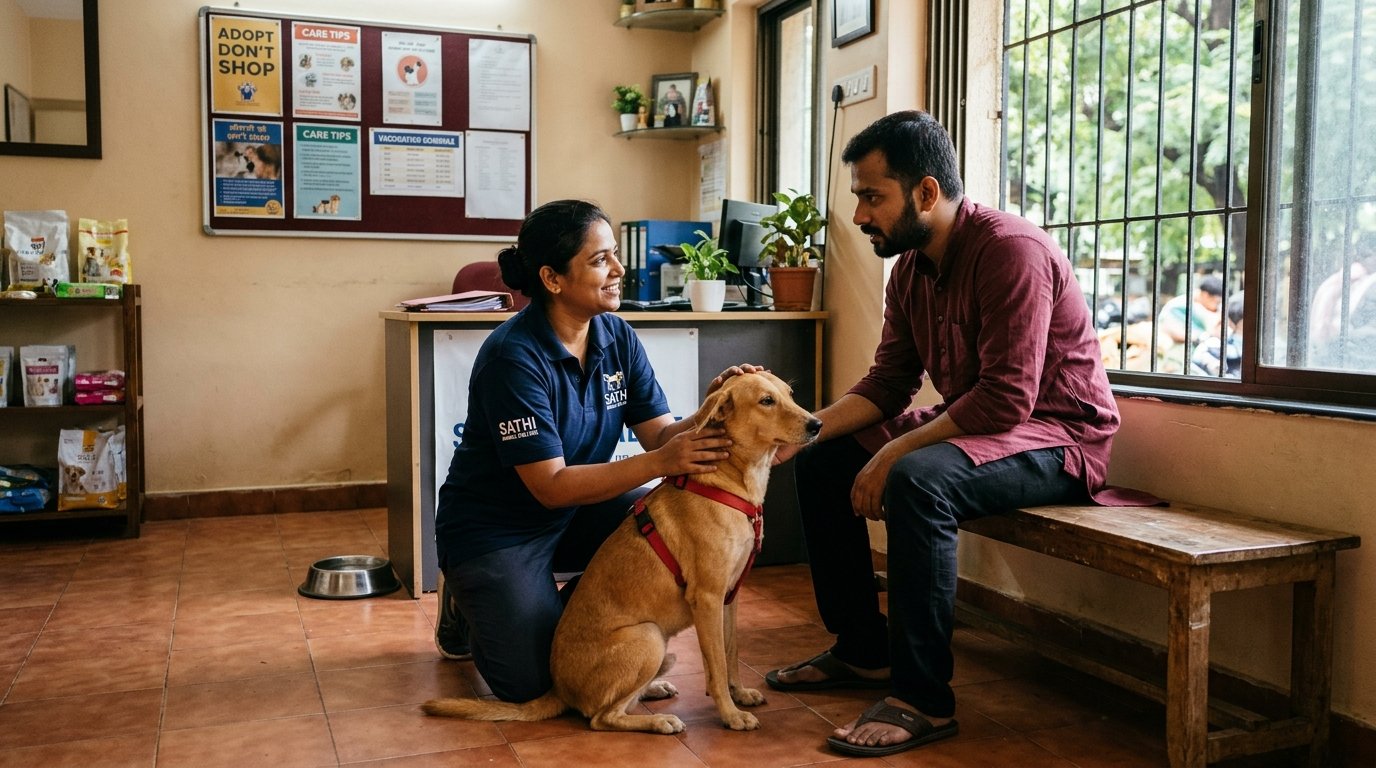
- Does it have a collar, tag or microchip? It may be someone’s pet. Post a photo in local groups and ask neighbours.
- Does it have a notched ear? That usually means it was sterilised and vaccinated under the ABC programme and is a known community dog.
Step 3: Run Your Magnet Audit and Change One Thing
Start with the strongest magnet, for example moving a feeding bowl 20 metres away, or covering the bins. Change one thing at a time, and watch for a week.
Step 4: Give the Dog a Better Alternative Nearby
A gentle way to shift a dog is to make a better offer elsewhere. A simple covered box with a clean cloth, placed at a quiet spot that does not block a path, is often enough. This works best with the help of your neighbours or RWA.
Step 5: Get the Dog Sterilised and Vaccinated
Contact your municipal ABC unit or a registered NGO. A sterilised, vaccinated dog is calmer, less territorial, safer around people, and protected against rabies. After the procedure, the dog is returned to the same area, as the ABC Rules require. Our guide on how to help stray dogs in India explains how to organise this in your lane.
Step 6: Talk to Your Neighbours and RWA
A stray dog is easier to live with when everyone agrees on a few simple rules: where dogs are fed, who cleans up, who to call if there is a problem. Ask your RWA to put a short policy and a helpline number on the notice board.
What You Must Not Do
These are the things people sometimes try, and why they are not allowed or do not work:
- Do not relocate the dog yourself. Under the Animal Birth Control Rules, 2023, community dogs may be captured only for sterilisation and vaccination and are then returned to their area. A High Court judgment reported by SCC Online directed that dogs captured outside the rules be returned to the same spot after sterilisation. Dogs moved elsewhere often return, or suffer in unfamiliar surroundings.
- Do not harm, poison, beat or maim the dog. Killing or maiming an animal is an offence under Section 325 of the Bharatiya Nyaya Sanhita, 2023, which carries imprisonment of up to five years, a fine, or both. It is also cruelty under the Prevention of Cruelty to Animals Act, 1960.
- Do not use chilli powder, acid, hot water or sprays. They cause pain and injury and do not fix the cause.
- Do not call a private person to “clear” the dogs. Only authorised local-body teams and recognised organisations can capture dogs, and only under the rules.
- Do not threaten or intimidate people who feed or care for dogs. Disputes should be resolved through your RWA and the local body.
If the Dog Is Aggressive or Has Bitten Someone
Your safety matters, and the rules provide a process:
- Get medical help first. Wash a bite or scratch with soap and running water for about 15 minutes, and go to a doctor the same day for anti-rabies treatment.
- Document everything: date, time, place, photos or video of the dog, and the medical record.
- Complain to your municipal corporation or local body and ask them to act under the ABC Rules, which include a procedure for dog bite complaints and for dogs that are aggressive or suspected to be rabid. Reports also describe the Supreme Court’s 2026 directions on rabid or dangerous dogs. Let the authorities, not residents, decide what should happen to the dog.
- Follow up in writing and ask for the reference number.
- Involve an NGO if progress is slow, because many offer help with complaints.
Who to Call About Stray Dogs in Your Society
| Situation | Who to Contact |
|---|---|
| Dog needs sterilisation or vaccination | Municipal ABC unit, or a registered animal NGO |
| Dog is injured or sick | Local rescue, vet clinic or municipal veterinary hospital |
| Dog has bitten someone, or seems aggressive or rabid | Doctor first, then the municipal corporation or local body |
| Dispute over feeding or dogs in your society | RWA committee, then the local body. Under the ABC Rules, a committee handles feeding-space disputes |
| Someone is harming or poisoning dogs | Police and an animal welfare organisation |
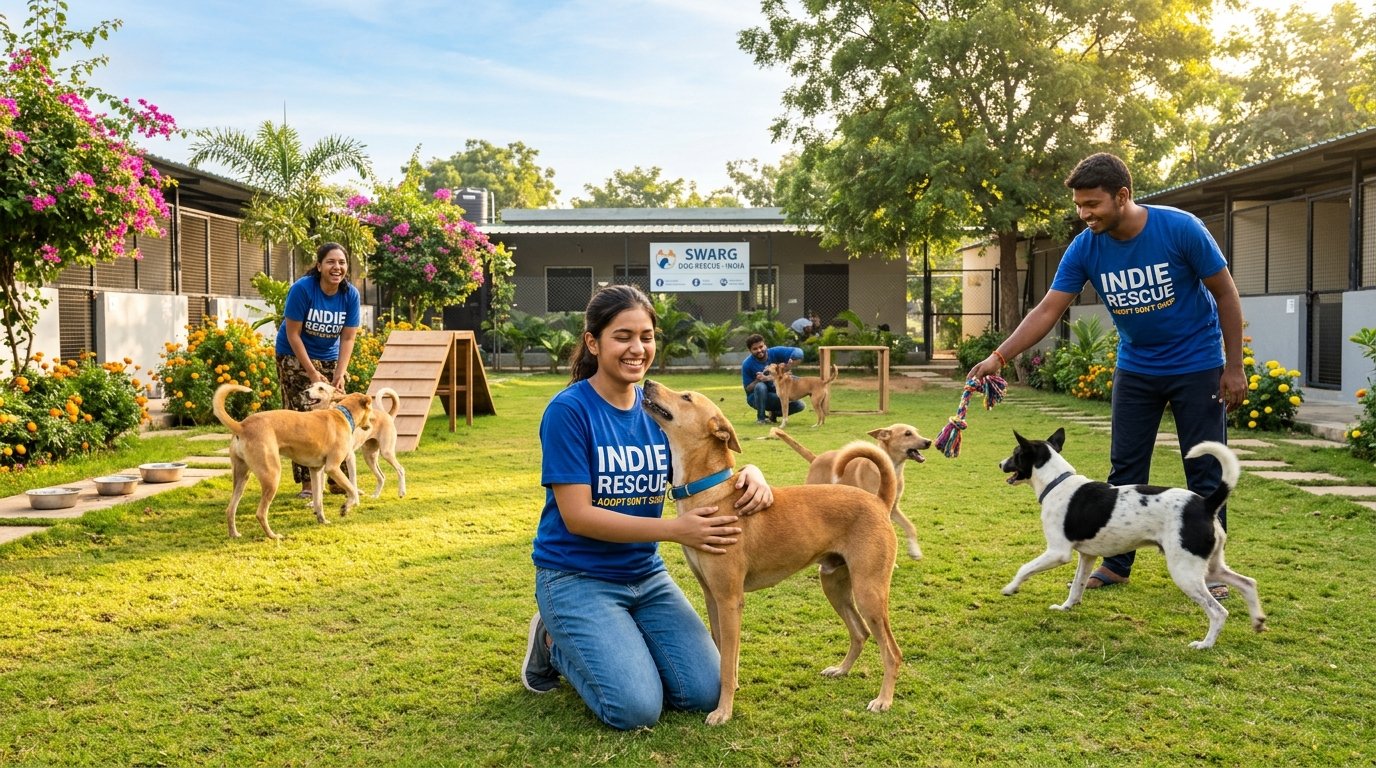
| You want to adopt or foster | A local rescue or shelter |
When the Dog Just Wants to Stay: Adopting or Fostering
Sometimes the answer is that the dog has chosen you. If you are able to keep the dog, adoption can be a good outcome, but plan carefully:
- Take the dog to a vet for a check, vaccination and sterilisation.
- Think honestly about space, time, cost and family agreement.
- Expect an adjustment period. Our guide on the 3-3-3 rule for dogs explains the first three months.
- If you cannot keep the dog, do not drop it elsewhere. Read our guide on how to rehome a dog safely.
- If you cannot adopt, you may still be able to help by fostering for a short time while a rescue finds a home.
How the Season Changes What the Dog Wants
| Season | What the Dog May Be Looking For | Humane Response |
|---|---|---|
| Summer | Cool floors, shade, water | Provide water and shade at a spot away from your door |
| Monsoon | Dry, covered space, shelter from rain | A covered box or sheltered corner nearby |
| Winter | Warmth, a soft surface | A clean blanket or sack in a protected spot |
Frequently Asked Questions
What should I do with a stray dog that won’t leave?
Find out why it stays, remove the reason (usually food or comfort), check if it is lost or needs help, and ask your municipal ABC team or an NGO to sterilise and vaccinate it.
How do I get a stray dog to stop staying at my gate?
Change what makes the gate attractive: cover bins, stop feeding there, and offer a better resting place nearby. Do not use force, chemicals or scare tactics.
Can I relocate a stray dog in India?
No, not on your own. The ABC Rules allow community dogs to be captured only for sterilisation and vaccination and then returned to the same area.
Who do I call about stray dogs in my society?
Start with your RWA and the municipal ABC unit, and an animal NGO for help. Call a doctor and the local body if there has been a bite.
Is it legal to hurt or poison a stray dog?
No. Killing or maiming an animal is an offence under the Bharatiya Nyaya Sanhita and the Prevention of Cruelty to Animals Act.
What if I am afraid of the dog?
Stay calm, keep your distance, avoid eye contact, and do not run. Report concerns to your RWA and local body, and ask for sterilisation and vaccination, which tend to reduce territorial behaviour.
Need Help with a Stray Dog Near You?
If you are not sure what to do, talk to Hope Mitra. We can help you think through safe, lawful options. You can also support our work with street dogs.