
You are on your way somewhere when you see a dog lying at the roadside, limping, thin or trembling. Your heart says help. But a frightened or hurt dog can bite, run into traffic, or get worse if handled the wrong way. The kindest rescue is the one that is done safely, for the dog and for you.
This guide walks you through exactly what to do, in order, from the first 60 seconds to what happens after rescue. It is written for ordinary residents in India with no training. It also includes a simple tool that gets rescuers to respond faster.
Legal note: Rules about stray and community dogs in India have changed in recent years. This guide reflects the position as of November 2026. Check your city’s current rules and have this page reviewed legally before publishing.
Quick Answer
- Stay safe first. Do not grab, corner or hug an injured or scared dog.
- Decide if it is an emergency using the green, amber and red checklist below.
- Call for help before you act: a local rescue, a municipal vet, a helpline, or a vet clinic. Give an exact location.
- If you must move the dog, do it with two people, a blanket or towel, and calm, slow movements.
- Never give human medicines. Take the dog to a vet.
- Not every stray needs rescuing. Many healthy street dogs are best left in their own area, with sterilisation and vaccination.
Step 1: Keep Yourself and the Dog Safe (First 60 Seconds)
- Stop at a safe distance, at least a few metres away.
- Look at the surroundings: traffic, crowds, other dogs, and where the dog could run.
- If the dog is in the road, switch on hazard lights if you are in a vehicle, and ask a bystander to help slow traffic. Do not put yourself in danger.
- Keep children and onlookers back. Crowds frighten dogs.
- Do not shout, stare or make sudden movements.
A frightened dog may bite even if it is normally gentle. Pain and fear change behaviour.
Step 2: Check How Serious It Is (Green, Amber, Red)
Use this quick checklist to decide how fast to act:
| Level | What You See | What to Do |
|---|---|---|
| Red: Emergency | Hit by a vehicle, bleeding heavily, cannot stand, seizures, laboured breathing, swollen belly, open wounds with maggots, suspected poisoning, collapsed in heat | Call a rescue or vet immediately. Get help moving the dog. Do not wait |
| Amber: Needs help soon | Limping, skin sores or mange, very thin, eye or ear problems, a mother with newborn puppies in a dangerous spot, lost-looking with a collar | Call a rescue or vet the same day, keep watching, offer water |
| Green: Probably fine | Healthy, alert, moving normally, an ear notch showing it is already sterilised, living with a community that feeds it | Leave it in its area. If it is not sterilised or vaccinated, ask your municipal ABC team or an NGO |
If you are unsure, treat it as amber and ask a rescue organisation or vet to look at a photo or video.
Step 3: Call for Help (Who to Call in India)
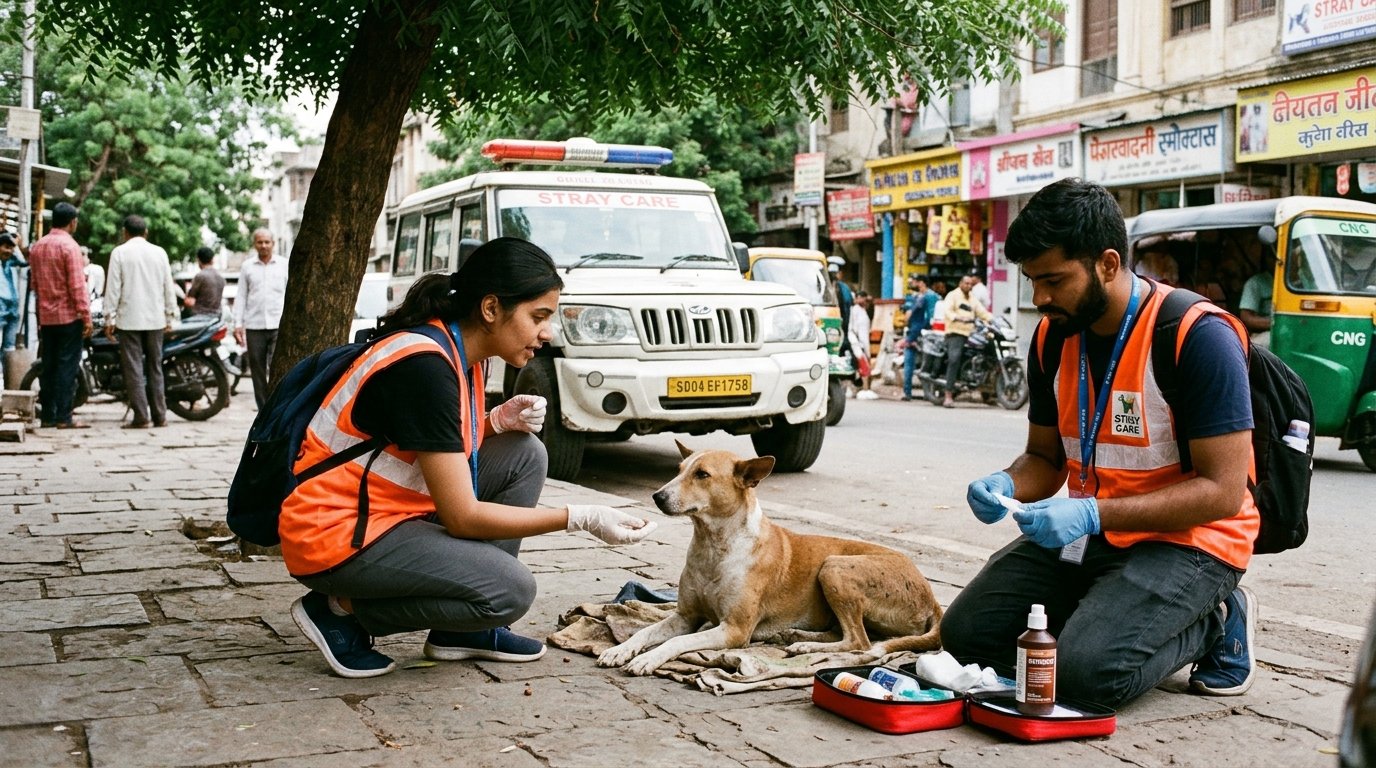
Do this before you try to handle the dog. Try these in order:
- A local animal rescue or NGO in your city that offers pick-up. Ask if they have an ambulance.
- A nearby vet clinic or municipal veterinary hospital. Many will advise, and some will send help.
- Animal helplines. Some states run a government animal helpline, and the number 1962 is used for animal services in several places. It may not work in your area, so check what is available locally.
- The municipal ABC or animal-control unit. Useful for sterilisation, vaccination and treatment of community dogs.
- The police, if the dog has been deliberately harmed, poisoned or abused. Note down time, place and any witnesses.
If you have a Hope Mitra helpline number, keep it in your phone.
The Insight Most Guides Miss: Send a 60-Second Rescue Report
Most guides say “call a rescue”. They do not tell you what to say, so rescuers lose precious minutes asking questions, or send help to the wrong place, or cannot judge how urgent it is.
Use the 60-Second Rescue Report. Before or while you call, send this to the rescuer on WhatsApp. It takes one minute and can save an hour.
- Pin: Share your live location, or a Google Maps pin, with one landmark (for example, “behind the pharmacy, near the red gate”).
- 20-second video: Film the dog walking or lying from a distance. This shows limping, wounds and breathing better than any description. Do not get close for it.
- Photo of the injury if you can see it safely.
- Five facts in one message:
“Medium brown male dog, about 1 year old. Hit by a bike 20 minutes ago. Cannot stand, back leg bleeding. Scared but not biting. I am staying here and two people are keeping the crowd away.”
These are the five: size and look, what happened and when, main injury, temperament, who is on site. - Your name and number, and whether you can help move the dog or wait.
Why this works:
- Rescuers can triage by video, deciding whether to send an ambulance, a vet, or advice.
- It removes back-and-forth and cuts response time.
- It tells them whether it is safe to approach.
- It gives the vet a head start on what to prepare.
Step 4: Wait Safely and Reduce Stress
While you wait for help:
- Stay nearby, but not too close. Sit or crouch to the side, not facing the dog head-on.
- Keep voices low and movements slow.
- Put out a bowl of clean water. Do not force the dog to drink.
- Do not offer food if the dog is badly injured, as it may need surgery. If you are unsure, ask the vet.
- In heat, move the dog into shade if you can do so safely. In rain or cold, cover it with a dry cloth.
Step 5: Approaching a Scared Stray Dog
Only approach if help is delayed, the dog is in immediate danger, or a rescuer or vet has told you to.
Reading the dog: A frightened dog may show a tucked tail, flattened ears, lip-licking, yawning, showing the whites of its eyes, low growls, or a stiff body. These are warnings. Back off if you see them.
If it is safe to move closer:
- Approach from the side, not head-on, and avoid direct eye contact.
- Move slowly and speak softly.
- Toss a little food (plain biscuit or boiled rice) to make a gentle connection, unless the dog may need surgery.
- Let the dog sniff you before you try to touch it.
- Touch the shoulder or chest first, not the head or injured area.
- If the dog growls, snaps or backs away, stop and wait for a professional.
Step 6: Moving an Injured Dog
- Always use two people if possible.
- Slide a blanket, towel or sheet under the dog and use it as a stretcher, keeping the spine and back straight.
- For a small dog, a box, basket or carrier works.
- Keep the dog’s head level and supported.
- Do not lift by the legs, neck or tail.
- If you must restrain the head, a soft cloth wrapped loosely around the muzzle can help. Never use it if the dog is vomiting or struggling to breathe.
- Transport in an autorickshaw, car or ambulance with one person sitting with the dog if safe.
Step 7: First Aid You Can Safely Do
You are not a vet, and the goal is to keep the dog stable until professionals take over.
- Bleeding: Press clean cloth gently on the wound. Do not remove cloth that has soaked through; add more on top.
- Wounds: Rinse with clean water. Do not pour harsh chemicals or put powder on them.
- Maggots or deep wounds: Do not dig them out. This needs a vet quickly.
- Heat stress: Move to shade and wipe the paws and belly with cool, not ice-cold, water.
- Suspected poisoning: Call a vet immediately. Do not try to make the dog vomit unless a vet instructs you to.
- Never give human painkillers or medicines. Many are toxic to dogs.
- Wear gloves if you can, especially with skin sores. Some skin conditions can spread to people.
Step 8: Get a Vet Check
A vet will check injuries, look for fractures, dehydration and disease, and decide on treatment. Ask about:
- Vaccination, including rabies, and deworming
- Sterilisation, if the dog is not yet sterilised
- Tests for common illnesses
- Costs, and whether the rescue can help
Step 9: Protect Your Own Pets and Family
- Keep the rescued dog separate from your own pets until the vet has checked it. Some illnesses spread easily between dogs.
- Wash hands after handling.
- If you are bitten or scratched, wash the wound with soap and running water for about 15 minutes and go to a doctor the same day for anti-rabies treatment, even if the dog seemed healthy.
Step 10: What Happens Next?
Once the dog is stable, you have several options. Choose the one that is best for the dog, not the easiest for you:
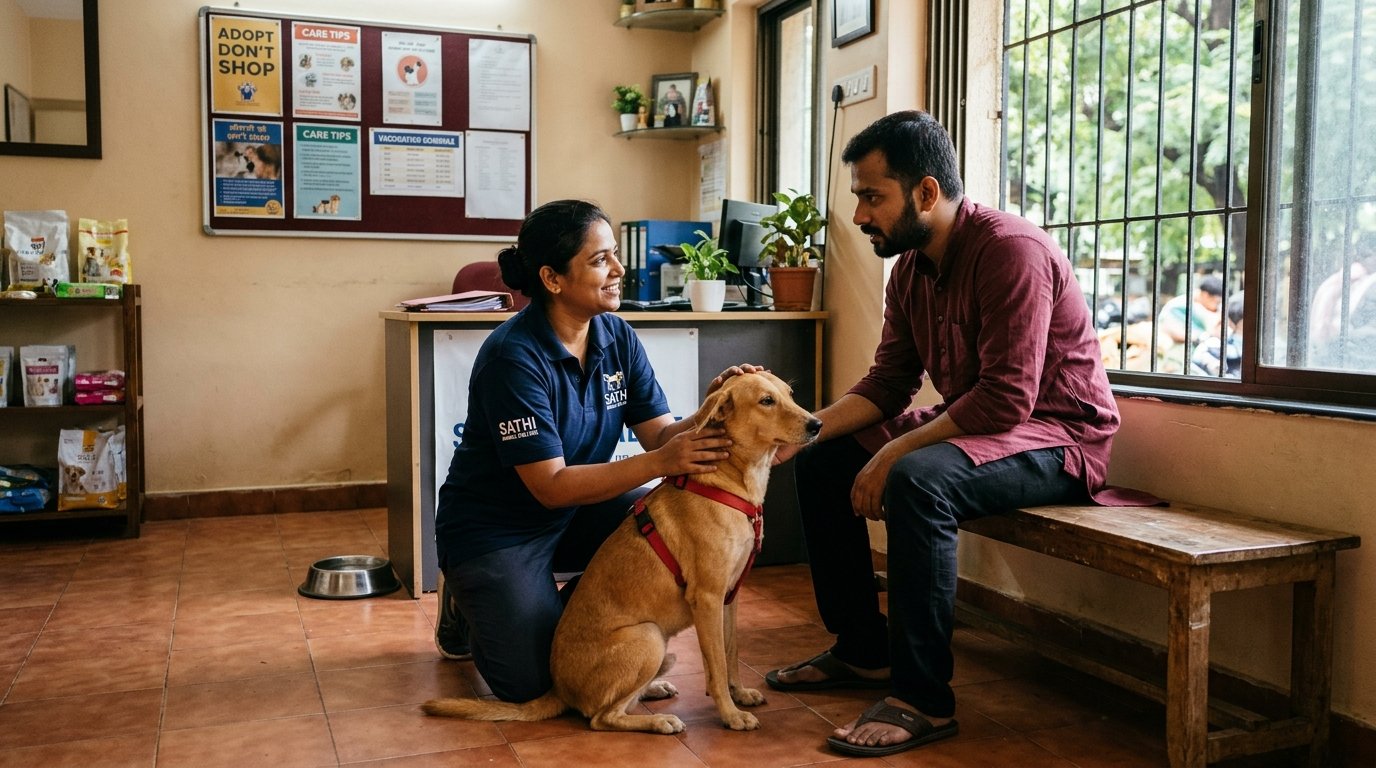
- Look for an owner. Check for a collar, tag, microchip or tattoo, ask neighbours, and post a photo in local groups with some details left out, so that only the real owner can describe them.
- Return to its area. If the dog is a healthy community dog with an ear notch, the right outcome after treatment is usually to go back to where it lives, as the ABC Rules intend. The government’s announcement of the ABC Rules, 2023 explains that the rules aim to manage dog and human conflict without relocating dogs from their area.
- Foster or adopt. If the dog is injured, a puppy, or cannot live safely where it was found, fostering or adopting may be best. Our guide on the 3-3-3 rule for dogs shows what to expect in the first months.
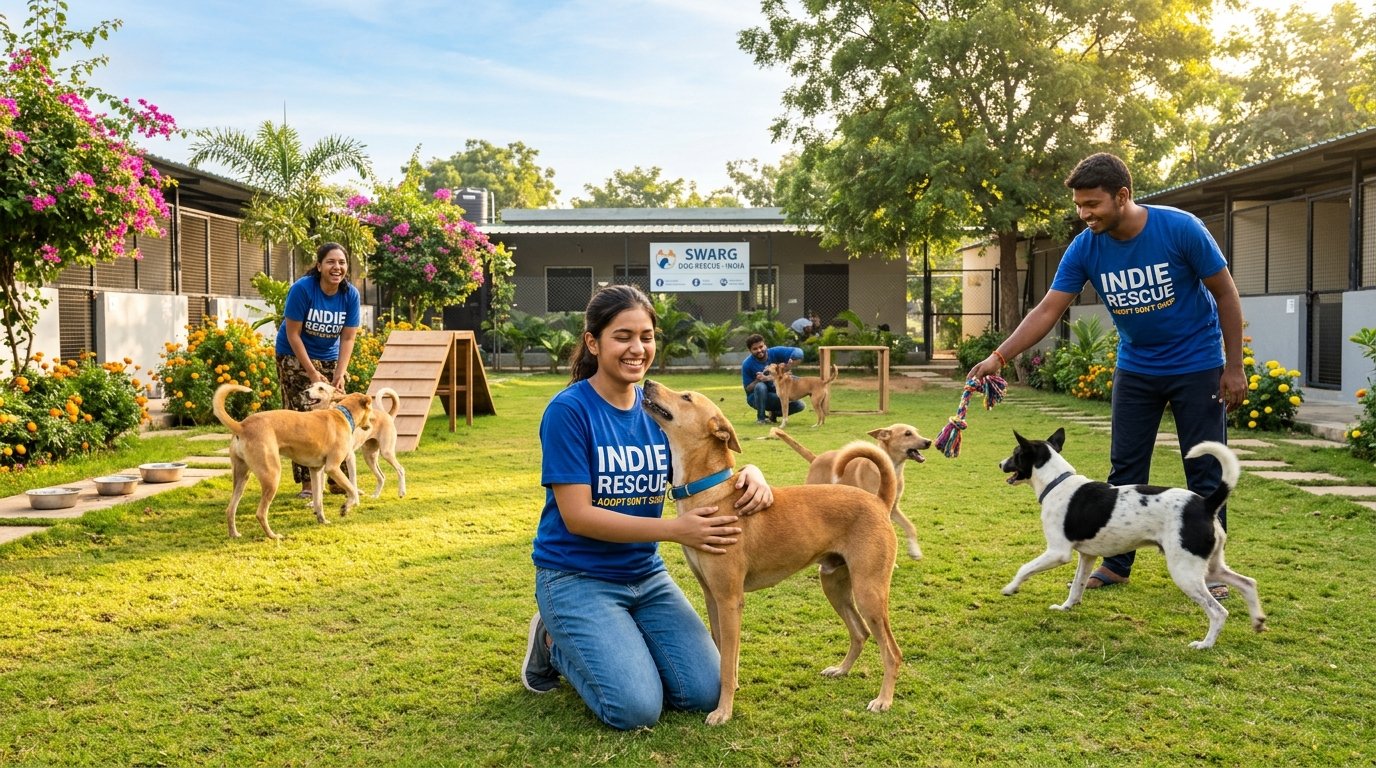
- Hand over to a rescue or shelter. Ask first about space and costs, and read our guide on how animal shelters in India work.
Is It Legal to Take a Stray Dog Home in India?
Adopting a dog is allowed, and rescues and the ABC framework encourage adoption. But relocating street dogs from their territory is restricted under the ABC Rules, so do not move healthy community dogs away from their area as a favour. Rules and court directions have changed in recent years, so check what applies in your city and ask your local body or the Animal Welfare Board of India if you are unsure. If you adopt, plan for vet care, vaccination and sterilisation from day one.
Special Situations
- Puppies alone: Watch from a distance for a few hours. The mother is often nearby foraging. Do not remove puppies unless they are in danger or clearly abandoned.
- A dog hit by a vehicle: Treat as red. Keep it still, call for help, and move it only with support for its back.
- A dog with severe mange or skin sores: Wear gloves and call a rescue. It needs treatment, not just food.
- A dog that keeps coming to your gate: Our guide on what to do when a stray dog won’t leave explains humane steps.
- A dog who looks like a lost pet: Check for ID and look for the owner before assuming it is a stray.
Do’s and Don’ts
| Do | Do Not |
|---|---|
| Keep a safe distance and stay calm | Corner, chase or grab the dog |
| Call a rescue or vet first | Give human medicines |
| Send a video and a location pin | Pour chemicals, powder or oil on wounds |
| Use a blanket or towel to move it | Lift by the legs, tail or neck |
| Keep it away from your own pets | Leave it alone in traffic or heat |
| Wash a bite with soap and water for 15 minutes | Wait to see if the dog is sick before seeing a doctor |
Frequently Asked Questions
How do I rescue a stray dog in India?
Stay safe, assess how urgent it is, call a local rescue or vet with a clear location, wait at a safe distance, and move the dog only with help and a blanket or stretcher.
How do I help an injured stray dog?
Keep calm, call for help, apply gentle pressure to bleeding, offer water, and get the dog to a vet. Never give human medicines.
What should I do after rescuing a stray dog?
Separate it from your pets, get a vet check, vaccination and deworming, look for an owner, and decide between returning it to its area, fostering, adopting, or placing it with a rescue.
Who do I call to rescue a stray dog in Mumbai or my city?
Start with local animal rescues and NGOs that offer pick-up, then nearby vet clinics, the municipal veterinary hospital and any state animal helpline. Ask for a number that works in your area.
How do I approach a scared stray dog?
Approach from the side, avoid eye contact, speak softly, let the dog come to you, and stop at any growl or snap.
Can I take a stray dog home?
Yes, adoption is allowed, but do not move healthy community dogs from their territory without good reason. Check local rules and plan for vet care.
Need Rescue Help?
If you have found a dog in need, contact Hope Mitra with a location and a short video. You can also donate to help us treat and rehome more dogs. For ways to help street dogs long term, read our guide on how to help stray dogs in India.