
Most people who want to help dogs do the same thing: they buy a big bag of food, bundle up some old clothes, and drop them off at a shelter. It comes from a good place. But shelters often tell us the same thing quietly: some of it is exactly what they needed, and some of it creates extra work.
This guide shows you what dog shelters in India genuinely need, how to give it so it actually helps, what to leave at home, and one smarter way to give that very few donors know about. If you would rather give money, we also explain when that is the better choice.
Quick answer
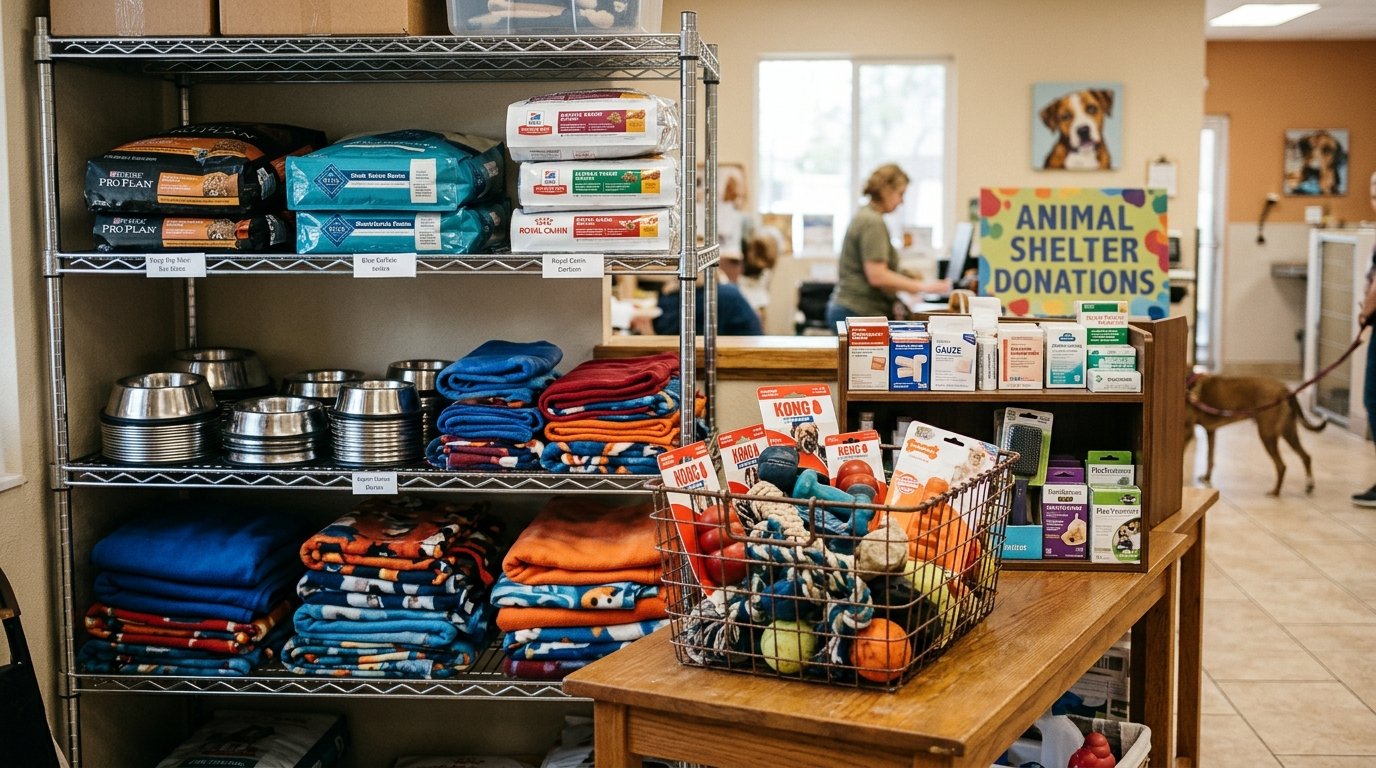
- Most useful items: dog food, clean blankets and towels, newspapers, disinfectants, cleaning supplies, and vet-approved basics like dewormers and tick and flea products.
- Always check first. Needs change every week. A two-minute message before you buy can save the shelter storage space and you money.
- Never donate: expired food or medicine, human leftovers, damaged items, or anything you would not give a dog yourself.
- Often better than items: a payment toward a dog’s treatment, a monthly sponsorship, or your time.
Why “call before you buy” matters
Shelters run on tight budgets, small spaces and few staff. Every item that arrives has to be sorted, stored and used before it spoils. Ten bags of the wrong food or fifty old blankets in the monsoon can be a burden, not a gift.
So before you buy, send a short message like this:
“Hello, I would like to donate some items. What does the shelter need most right now, and in what quantity? Is there a brand or type you prefer? Where and when can I drop it off?”
A good shelter will answer with a specific, current list. If they cannot tell you what they need, that is useful information too. Our guide on how to choose a trustworthy animal charity explains what else to check.
The shelter needs list
Use this table as a starting point, then confirm with the shelter you are giving to.
For Hope Mitra, our current needs are listed here. (Insert your real, current wish list with item, quantity and a last-updated date before publishing. Update it monthly.)
What not to donate
These are the things shelters most often wish people had not brought.
- Expired or opened food and medicines. They cannot be used and have to be thrown away.
- Human medicines. Many are toxic to dogs. Only give medicines a vet has approved.
- Human leftovers and sweets. Chocolate, onion, garlic, grapes and heavily spiced food can be harmful.
- Dirty, torn or damp bedding. It becomes waste, and damp cloth can spread skin infections.
- Small toys that can break apart. Pieces can be swallowed. Strong, chew-safe toys are better.
- Large quantities of a new food brand. A sudden change in diet can upset dogs’ stomachs, so ask before bulk buying.
- A dog you cannot keep. A shelter is not a drop-off point. If you need to rehome a dog, read how to surrender a dog responsibly first.
The smarter way to give: sponsor a treatment, not a thing
Here is a gap in most donation advice. People think the choice is “give money” or “give items”. There is a third option that tends to be more useful and more transparent than both: the vet credit.
Shelters spend a surprising share of their budget at veterinary clinics, on things like surgeries, vaccines, sterilisation, blood tests and emergency treatment. Items on a shelf cannot cover these. And a general cash donation, while flexible, leaves you wondering what it paid for.
A vet credit works differently. You pay a set amount directly to the clinic or pharmacy the shelter uses, earmarked for that shelter or even for one named dog. For example:
- Ask the shelter which clinic they use and what a specific need costs, such as a vaccination course, a sterilisation, or a dressing change for an injured dog.
- Pay that clinic directly, or pay through the shelter’s official account with a note saying what it is for.
- Ask for the invoice or a short update with a photo and the date of the treatment.
Why this works for both sides:
- You get proof. You see exactly what your money did, down to the invoice.
- The shelter avoids a bottleneck. The treatment gets paid for exactly when the dog needs it.
- No storage, no waste. There is nothing to store, sort or throw away.
- It protects the dog’s care. Vet bills are the cost that most often forces a shelter to delay treatment.
If you cannot give a large amount, you can still sponsor part of a bill. Many shelters are glad to let several donors share one expensive treatment.
When money is better than items
Items feel concrete, but money is often the more efficient choice, especially when:
- The shelter buys food and supplies in bulk and can stretch your rupee further than a shop can.
- You are not sure what they need.
- The need is medical, because vet care cannot be donated as an item.
- You are far away, so shipping and handling would add cost and delay.
If you do give money, check that the organisation is genuine and pay only to an account in its own name. Under India’s tax rules, the deduction for donations (now under Section 133 of the Income-tax Act, 2025) applies to donations made as a sum of money. Gifts of items generally do not qualify for a deduction, so if a tax receipt matters to you, give money and keep the receipt. Please confirm details with your chartered accountant.
Other ways to help that cost nothing
- Foster a dog. Even a few weeks frees up a kennel space for another dog.
- Volunteer. Walk dogs, clean, take photos, drive an injured dog to the vet, or help at adoption events.
- Share adoption posts. A single share can put a dog in front of the right family.
- Skills. Writers, designers, accountants and vets can all give hours that a shelter would otherwise pay for.
- Help owners stay with their dogs. Many dogs end up in shelters because of a short-term crisis. See why pets get abandoned and how a small gift can prevent it.
- Care for street dogs near you. Our guide on how to help stray dogs in India shows safe, practical ways to start.
A quick checklist before you donate
- I messaged the shelter and asked what they need now.
- Everything is sealed, unexpired and clean.
- I know when and where to drop it off, and who will receive it.
- I am not donating human medicines or food.
- I asked about a vet credit or part-payment of a treatment.
- If I need a tax receipt, I am giving money and keeping the receipt.
Frequently asked questions
Can I donate old blankets to a dog shelter? Yes, if they are clean, dry and in good condition. Torn, dirty or damp blankets become waste. Ask first, because many shelters get more blankets than they can store, especially after winter drives.
What do dog shelters need the most? Food and veterinary care are the two biggest needs. After that come cleaning supplies, bedding, and basic first-aid items. The right answer for any shelter is on its current wish list, so ask.
Can I donate dog food, and which kind? Yes. Ask which brand and size the shelter uses, and give sealed, unexpired packs. Dogs do better on a steady diet, so a sudden switch to a new brand is not always helpful.
Can I donate medicines for stray dogs? Only if a vet approves them and they are unopened and unexpired. Never give human medicines. In most cases, paying for the treatment directly at the clinic is safer and more useful.
Is a donation of items tax deductible in India? Generally no. The deduction applies to donations made as a sum of money to an approved organisation. Check with your chartered accountant.
Is it better to donate items or money? It depends. Items suit routine needs the shelter has told you about. Money, or a vet credit, suits medical needs and gives the shelter flexibility.
Ready to help?
See our current wish list, or donate to Hope Mitra towards a specific treatment. If you are weighing up where to give, our guide to how animal shelters work in India explains what to expect.