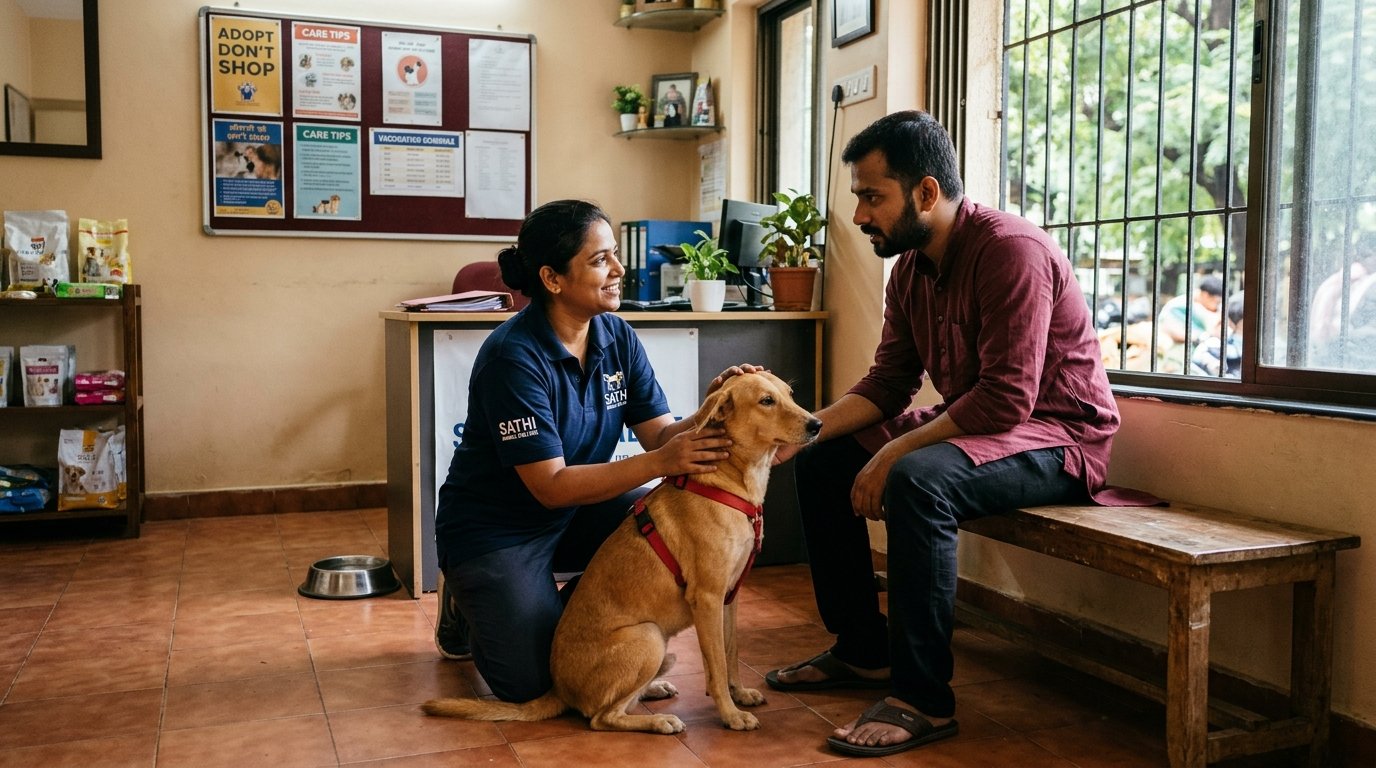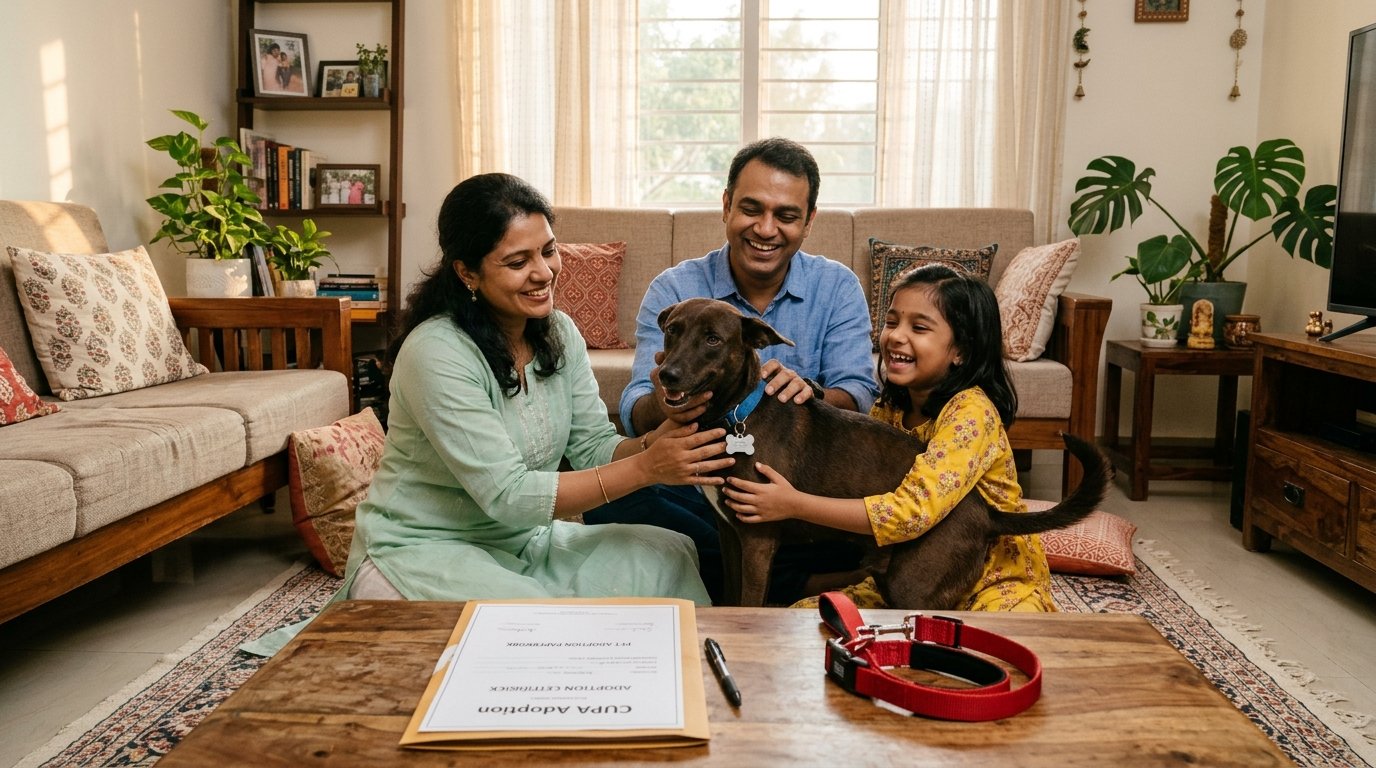


There is no single “best” dog charity in India. There is only the best charity for what you want to change, and one you can actually verify. A tiny rescue that feeds and sterilises street dogs in one neighbourhood can do more good per rupee than a famous name with a glossy campaign, or the other way round. The difference is rarely visible on a donation page.
This guide gives you a neutral, step-by-step way to choose, whether you are donating ₹500 or sponsoring a dog for a year. It covers what to check, what to ask, how tax deductions work now, and the red flags that should make you pause. It also includes one test that very few donors know to apply: the Outcome Ledger.
Quick answer
- Decide your goal first: street dogs, shelter dogs, injured-dog rescue, sterilisation, or adoption.
- Verify the charity on five things: legal registration, tax approvals, financial reports, a place you can see, and published outcomes.
- Ask for the Outcome Ledger (below). A charity that tracks what happens to every dog can answer in minutes.
- Pay only to an account in the organisation’s own name, never to a personal UPI ID.
- Start small, watch what happens to your first donation, then give more.
Step 1: Decide what “helping dogs” means to you
Dog charities in India do very different work, and each uses your money differently.
If you want a quick, measurable impact, sterilisation and vaccination programmes and rescue work are easiest to count. If you care about individual animals, a shelter or foster-based rescue may suit you better. Our guide on how to help stray dogs in India shows how these pieces fit together.
Step 2: The 7-point verification checklist
Run any charity through these seven checks before you give. Most can be done in 15 minutes.
1. Legal registration. An Indian animal charity should be a registered trust, society, or Section 8 company. Ask for the registration number and the name on it, and check that it matches the name on the donation page and the bank account.
2. Tax approvals (12A and 80G). Ask for the certificates. Check the approval number, the organisation’s name, and the validity dates. Approvals are not permanent and have to be renewed, so an old certificate is not enough. See the tax section below for why this matters.
3. NGO Darpan ID. Many genuine NGOs have a unique ID on the government’s NGO Darpan portal. It is not a quality mark, but its absence is worth a question.
4. FCRA (only if relevant). If the charity accepts foreign donations, it must hold an FCRA registration. If it does not, it should not be taking money from abroad.
5. Financial reports. Ask for the last two annual reports and audited statements. A trustworthy charity can show you where money came from and where it went, in plain language, without hesitation.
6. A place you can visit or see. Real organisations have an address, a named person you can speak to, and often a shelter or clinic you can visit. Video tours and recent, dated updates help if you are in another city. Check whether the charity is recognised by the Animal Welfare Board of India if it runs a shelter.
7. Clear, official payment channels. Donations should go to a bank account or payment page in the organisation’s own name. If you are asked to send money to a personal number, stop.
The insight most donors miss: ask for the Outcome Ledger
Most charities show you photos of rescued dogs. Very few show you what happened to all the dogs. Before-and-after pictures are marketing. A full record of outcomes is accountability.
So ask for the Outcome Ledger: a simple yearly table of what happened to every dog that came in. A reasonably run organisation can pull this from its records in a few days. A good one already publishes it.
How to read it:
- Messy honest numbers beat perfect ones. Every animal charity loses dogs to illness. A ledger with no deaths at all is more suspicious than one with a few.
- A charity with only success stories is selling, not reporting.
- If they cannot produce it in about a week, that is information too. It may mean the records are not kept.
We publish our own ledger and invite you to compare it with any organisation you are considering. (Insert Hope Mitra’s latest numbers and the date here before publishing. Only use figures you can back up.)
Are donations to dog charities tax deductible in India?
Often yes, but only if the charity holds a valid approval and you claim in the right way. Here is what to know as of late 2026. This is general information, not tax advice, so please check with your chartered accountant.
- The law has changed. The Income-tax Act, 2025 came into force on 1 April 2026. The old Section 80G deduction for donations now sits under Section 133 of the new Act. Receipts and certificates may still refer to 80G.
- The charity must be approved. Only donations to approved institutions qualify. This is why you should check the approval and its validity dates.
- Mode of payment matters. Section 133 allows the deduction only for donations made as a sum of money, and the department’s FAQs say cash donations above ₹2,000 do not qualify. Pay by bank transfer, UPI, card or cheque and keep the receipt.
- Your tax regime matters. The deduction is generally not available if you have opted for the new tax regime. Check which one you are in before counting on a deduction.
- Keep records. The latest return forms ask for payment details of donations claimed, so keep the receipt, the charity’s PAN and its approval number.
Red flags that should make you pause
- Pressure to donate right now, or emotional stories with no verifiable details.
- No registration number, no address, or a name that does not match the bank account.
- Donations requested to a personal UPI ID or wallet.
- Photos that are clearly stock images or reused from elsewhere.
- Guarantees such as “your money will save exactly 10 dogs”.
- No financial report, no annual report, and no answer when you ask for one.
- A shelter that will not let anyone visit, ever.
- Dozens of dogs, very few staff, and no vet involved.
- Unrealistic claims, such as zero deaths or a 100 per cent adoption rate.
Questions to ask before you donate
Copy this into an email or message:
“Hello, I am thinking of donating to help dogs and would like to understand your work before I do. Could you share your registration and 12A/80G details, your most recent annual report, and your Outcome Ledger for the last financial year, showing how many dogs came in, how many were adopted, sterilised or still in care, and how many died? Can I also visit or see photos with dates? Thank you.”
A good organisation will usually respond warmly, even if the numbers are modest.
Ways to help, beyond a one-time donation
- Monthly giving. Small, regular amounts help a charity plan food and vet care.
- Sponsor a dog. Cover a specific dog’s food or treatment, and ask for regular updates.
- Donate items. Food, blankets and medicines can help, but only if the charity needs them. See our shelter needs list before you buy anything.
- Volunteer or foster. Time, transport, photography and sharing adoption posts all matter.
- Help an owner keep their dog. Many dogs enter shelters because of a short-term crisis. Read why pets get abandoned and how small support can prevent it.
How Hope Mitra measures up
We would rather you judge us on the same checklist. Here is where we stand. (Fill in each row with real information before publishing, and link to documents wherever possible.)
If you are comparing us with other organisations, our guide to how animal shelters work in India explains what to expect from any of them.
Frequently asked questions
What is the best charity to help dogs in India? There is no single best one. The right choice depends on whether you want to support shelter care, rescue, sterilisation, or adoption, and whether the organisation passes the checks above. Compare two or three on the same checklist.
How do I check that an animal NGO is genuine in India? Check its legal registration, 12A/80G certificates and validity, NGO Darpan ID, FCRA status if it takes foreign money, annual reports, and a physical address. Make sure the name on the bank account matches the organisation.
Is a donation to an animal NGO tax deductible? It can be, if the NGO is approved and you pay by a permitted mode, but the deduction is generally not available under the new tax regime. The old Section 80G now falls under Section 133 of the Income-tax Act, 2025. Confirm with your chartered accountant.
Can I sponsor a dog in India? Many shelters and rescues offer sponsorship, which usually covers food and medical care for a specific dog. Ask what the amount covers and how often you will get updates.
Is it safe to donate to a dog charity online? Yes, if you use the organisation’s official payment page or bank account, and the receiving name matches its registration. Avoid personal UPI IDs and links sent by strangers.
How much of my donation actually reaches the dogs? No single number is right for every charity, because rescue, shelter and sterilisation work have different cost structures. Ask for the annual report and for a plain-language breakdown of costs.
Ready to give? Start with a small step
If you would like to support dogs through Hope Mitra, you can donate here, sponsor a dog, or ask us for our Outcome Ledger first. Whatever you decide, we hope this checklist helps you give with confidence, to us or to any good organisation.
Thinking about a dog who needs a home right now? Read our guide on how to surrender a dog responsibly in India.